
Should I install a heat pump?
Possibly. But don’t start with the heat pump. Start with the house.
A well-designed heat-pump system can improve comfort, reduce reliance on fossil fuels and improve an EPC. But the outdoor unit is only one piece of the puzzle.
Heat loss, radiators, controls, hot water and the electrical supply all have a vote.
A heat pump should be designed for the building, not simply installed instead of the boiler.
THE WORKSHOP JOURNAL
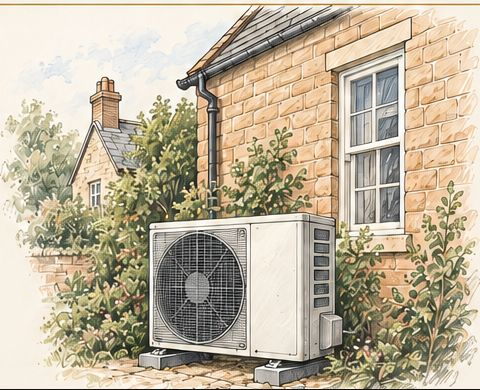
What actually makes the difference?
Before recommending a heat pump, we need to understand how much heat the property loses, how that heat will be delivered and whether the supporting systems can make the whole thing work properly.

The building
Heat pumps work best when unnecessary heat loss has been dealt with.
That means understanding the loft, walls, windows, draughts and ventilation rather than blindly insulating everything in sight.
The house does not need to become a thermos flask.
It does need to have a heat loss that the proposed system properly understands.
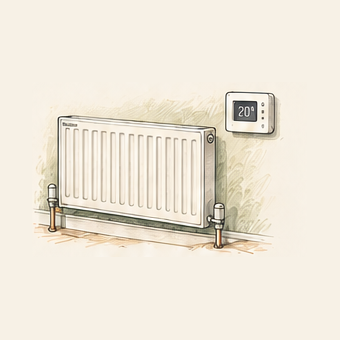
The radiators and other emitters
Heat pumps normally operate at lower flow temperatures than conventional boilers.
The radiators or underfloor heating therefore have to provide enough heat at those lower temperatures.
Some existing radiators may already be perfectly adequate. Others may need to be larger.
This should be calculated, not guessed.
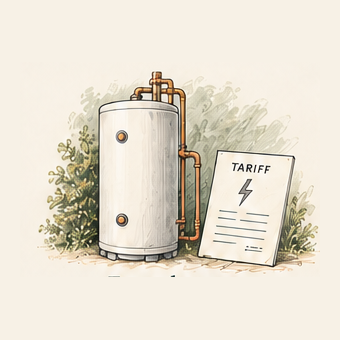
Everything supporting the heat pump
Controls matter. Hot water matters. The electrical supply matters.
The property may require a suitable hot-water cylinder, different heating zones or changes to its electrical installation.
Solar panels can work very well alongside a heat pump, but they do not rescue a poorly designed heating system.

What we’ve found in the Workshop
Our investigations have reinforced one point repeatedly:
A heat pump is a system decision, not an appliance swap.
We have modelled heat pumps as part of routes from lower EPC ratings towards C, but properties that appear similar on paper can require very different supporting measures.
The existing heating, building heat loss, required flow temperature and the way people actually use the home all influence the result.
That is why asking “Which heat pump should I buy?” is usually several questions too early.
Before you decide
Establish the property's heat loss rather than estimating from floor area alone.
Check whether the existing radiators can provide sufficient heat at the proposed flow temperature and whether there is suitable space for the outdoor unit and, where needed, a hot-water cylinder.
Confirm that the electrical supply is adequate.
Compare installation cost and disruption alongside likely comfort and running costs.
Look at insulation and ventilation together rather than simply trying to make the building as airtight as possible.
And treat solar PV as a possible companion to the system, not a prerequisite for installing one.
.png)

What does this mean for your home?
A heat pump can be an excellent option, particularly when replacing an inefficient or expensive heating system.
But the badge on the outdoor unit cannot guarantee low bills, warm rooms or the EPC result you expect.
In some homes, a few preparatory improvements will make the heat-pump route considerably stronger.
In others, another improvement strategy may offer better value with much less disruption.
The right answer starts with understanding the building.
.png)
BENCH SURVEY NOTE
The heat pump and the building have to work together.